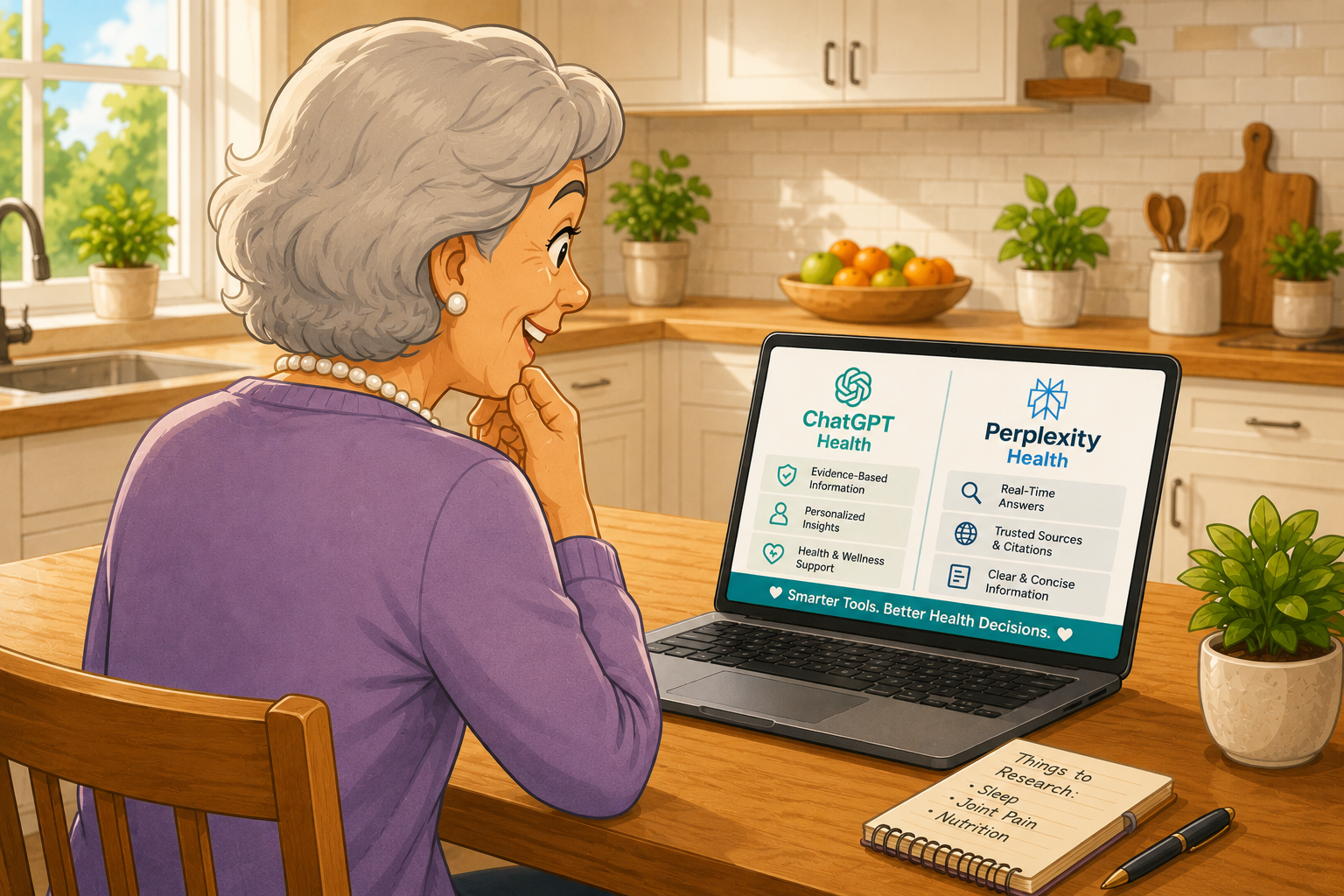
230 million questions. Every single week. About health.
That's how many times people turn to ChatGPT with a health-related question. According to OpenAI, about 40 million people do it every day. And honestly? I'm not surprised at all.
You leave the ED, urgent care, or your doctor's office. A result pops up in your patient portal a few hours later. Your hemoglobin is 10.2. Your TSH is flagged high. Your CT report says "mild bilateral atelectasis with no acute intracranial findings." Your doctor's office is closed. Or they're seeing 30 other patients. Or you just forgot to ask in the room.
So you Google it. And then you're reading Reddit threads from 2014 and convincing yourself you have three different cancers.
There's a better option now.
🩺 The Real Problem Isn't You
Let me be honest with you. Physicians are not always great at explaining results. Not because we don't care. Because the system doesn't give us the time to sit down and walk through every value.
You deserve to understand your own health data. That's not a radical idea. It's just the right thing.
Patients who understand their results ask better questions. Better questions lead to better care. It really is that simple.
🤖 Enter the AI Translators
A few AI tools are now specifically built to help you understand your health information. Here are the ones worth knowing about.
🧠 ChatGPT Health
OpenAI recently launched a dedicated health feature inside ChatGPT. You can share your labs, your imaging reports, your symptoms. It breaks them down in plain language. No jargon. Real, readable explanations from a tool that processes more health questions than almost any platform on earth.
Sign up and learn more at openai.com/index/introducing-chatgpt-health
🔎 Perplexity Health
Perplexity is a search-based AI that pulls from real-time, cited sources. Their health feature aims to give you clear, sourced answers without the rabbit holes. No conflicting Reddit threads. No sketchy supplement ads. Just answers you can actually read.
Learn more at perplexity.ai/hub/blog/introducing-perplexity-health
👨⚕️ A Physician's Actual Take
I'm recommending this. As a doctor. That's not something I say lightly about health content on the internet.
When results come back and they're confusing, AI can bridge that gap until you can speak with someone. It's not replacing your physician. It's giving you the vocabulary to have a better conversation with them.
Think of it like Google Translate. You still need the person in the room. But at least now you know what they're saying.
🔒 But This Part Actually Matters
Before you upload anything, understand what happens to your data.
This is not me being paranoid. This is me being a physician who has watched healthcare data get used in ways patients never expected.
🛡️ Check Before You Share
Look for a privacy policy before uploading health information. Understand whether your data is stored or used to train the model. The platforms listed above are building dedicated health features with this in mind — but you should always verify for yourself.
A 30-second search for "[tool name] health data privacy" goes a long way. Your labs are personal. Treat them that way.
Do not paste sensitive health information into a random AI tool without knowing how that data is handled. The legitimate platforms are getting better about this. General-purpose chatbots without clear privacy policies are a different story.
AI is not your doctor. It does not know your history, your allergies, or the fact that your "slightly elevated" result has been slightly elevated for 10 years and means nothing for you specifically. But it is an extraordinary tool for cutting through confusing medical language. Use it. Verify your privacy. Then go talk to your doctor. We like the informed patients. They make our jobs better.