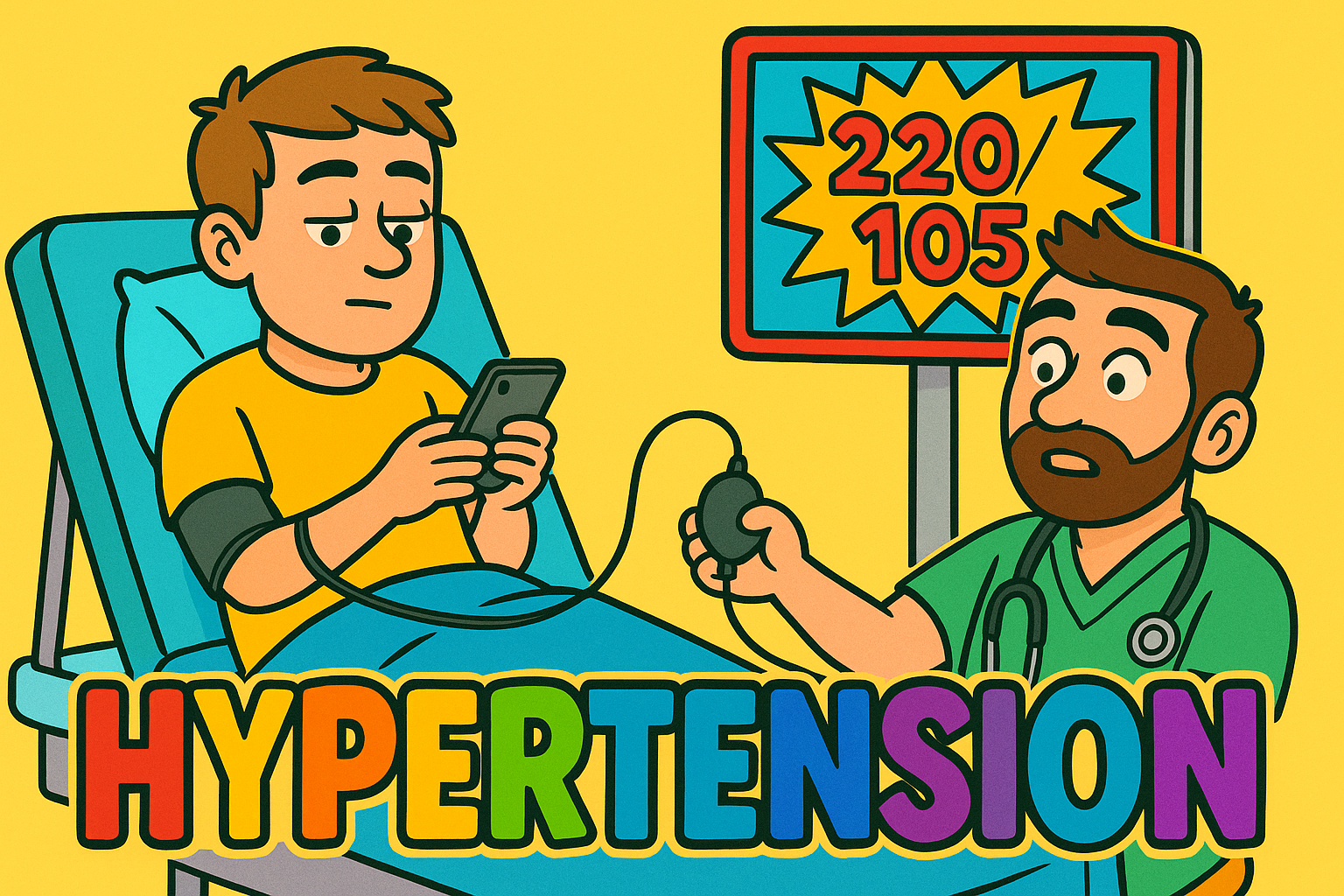
So there you were in the emergency department for a sprained wrist, a cough, a headache, or something completely unrelated. The nurse wrapped the cuff around your arm.
Squeeze. Squeeze. Hiss.
Your blood pressure is 185/110.
Cue the internal alarm bells. Your heart starts pounding, which, let's be honest, probably does not help the blood pressure situation. You may wonder, "Am I about to have a stroke right here in the lobby?"
Then the emergency physician walks in, asks how you feel, checks for concerning symptoms, and seems much calmer than you expected.
What gives?
There Are Two Very Different Situations
Think of your circulation like the plumbing in your house. Blood pressure is the force pushing through the pipes. A high number matters, but the key question is whether the pressure is causing active damage right now.
Hypertensive emergencyThis is high blood pressure with signs of new organ injury, such as stroke symptoms, heart attack symptoms, heart failure, kidney injury, or a dangerous neurologic change. This is a true emergency.
Severe blood pressure elevation without symptomsThis is a very high reading, but without signs that the brain, heart, lungs, kidneys, or eyes are being damaged right now. It still matters, but it is usually handled differently.
One is a house fire. The other is the smoke detector going off because you burned dinner. Both deserve attention. Only one needs the fire department immediately.
The American College of Emergency Physicians notes that routine emergency department testing and immediate treatment are not required for many adults with asymptomatic markedly elevated blood pressure. The key is looking for symptoms or signs of acute target-organ injury.
Why We Do Not Drop It Fast
This is the part that feels backward. If the number is high, shouldn't we lower it immediately?
Not always.
If blood pressure has been high for a while, your body may have adapted to that pressure. Your brain, kidneys, and blood vessels may be used to operating in a higher range. Dropping the number too quickly can reduce blood flow to important organs and create problems we were trying to avoid.
That is why, when there are no symptoms of organ damage, the safer plan is often gradual treatment and close follow-up rather than a dramatic emergency department rescue mission with IV medication.
The American Heart Association's scientific statement on elevated blood pressure in acute care emphasizes that elevated readings are common in the emergency department and hospital, and that management should distinguish asymptomatic elevation from hypertensive emergency.
But High Blood Pressure Is Still Important
Here is where I do not want the message to get lost. "Not an emergency today" does not mean "not a big deal."
High blood pressure is often called the silent killer because it can quietly damage blood vessels over years. It may not cause chest pounding, shortness of breath, or dramatic warning signs until it has already caused harm.
Over time, uncontrolled high blood pressure can increase the risk of:
Heart diseaseThe heart has to work harder, which can contribute to heart failure, heart enlargement, and heart attacks.
StrokeDamaged blood vessels in the brain can increase the risk of both ischemic and bleeding strokes.
Kidney diseaseThe kidneys are full of delicate filters that do not love constant high pressure.
Vision problemsTiny blood vessels in the eyes can be affected too.
So yes, that reading is your body's check-engine light. Your car may still be driving today, but you should not ignore the dashboard forever.
When to Call 911
Call 911 right away if your blood pressure is very high and you have chest pain, shortness of breath, weakness or numbness on one side, trouble speaking, confusion, fainting, severe sudden headache, vision changes, or any other concerning new symptom.
The American Heart Association advises calling 911 for blood pressure higher than 180/120 when symptoms of possible organ damage are present.
Your Game Plan After the ED
If your emergency department visit showed a very high blood pressure reading but no emergency organ injury, the next step is not to forget about it. The next step is follow-up.
Schedule follow-up soonCall your primary care clinician in the next few days. If you do not have one, this is a good reason to find one.
Take medications as prescribedIf you were prescribed a medication, take it exactly as directed. Do not stop just because the number improves.
Track readings at homeA few calm, seated readings over time are more useful than one stressful number in a loud ED room.
Make realistic changesWalking, sleep, less sodium, less alcohol, stress management, and taking medication consistently can all make a real difference.
The Bottom Line
Your sky-high blood pressure reading may have been scary, but if you had no symptoms and no signs of organ damage, it may not have been an emergency in that moment.
But it was still important.
Think of it as your body sliding you a note that says, "Hey friend, we need to talk." The good news is that high blood pressure is common, treatable, and very manageable once you know about it.
You are not broken. You are not automatically about to explode. But you should take the number seriously, follow up, and use it as a chance to protect your heart, brain, kidneys, and future self.
— Dr. Eric Cummins, MD