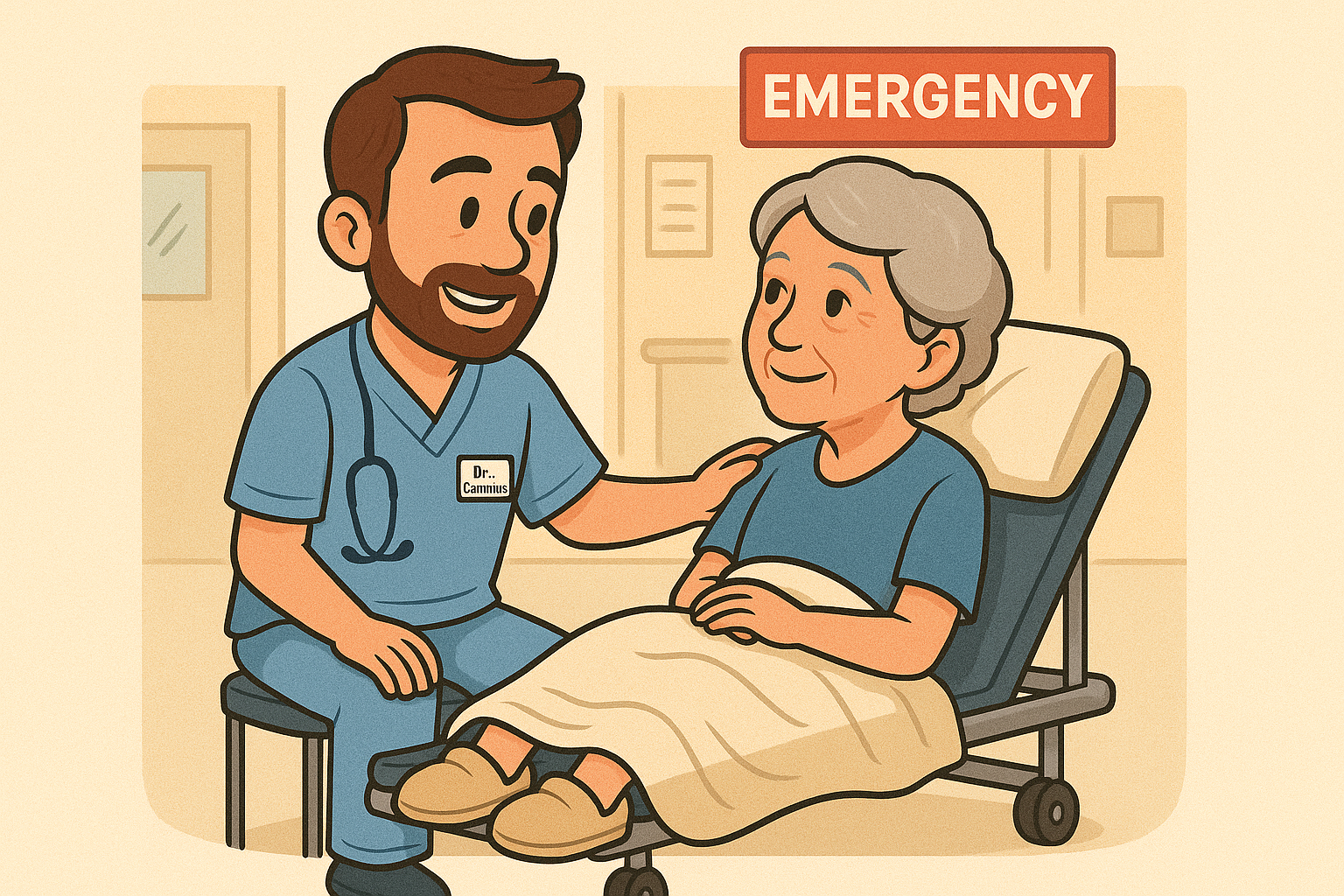
Visiting the emergency department can be a scary and overwhelming experience. You might be in pain, worried about what's wrong, or unsure what to expect. As emergency physicians, we want you to know that building trust with you is one of our top priorities — and it doesn't take years of training to achieve that.
It takes seconds.
Here are 6 simple things we try to do every visit to make sure you feel seen, heard, and cared for from the moment you arrive.
We Use Your Name — And Tell You Ours
From the very first interaction, we try to introduce ourselves by name and use yours. It creates an instant connection that reminds both of us this is a human interaction, not a transaction.
Why this matters: Studies show that when patients know their doctor's name and their doctor uses theirs, patients feel more understood and cared for — even during short visits.
We Sit Down When We Talk With You
You might notice that when possible, we try to sit down during your exam and conversation rather than standing at the door. It's a small thing that makes a big difference.
Why this matters: Studies show that when doctors sit, patients feel like the visit lasted longer and that their doctor spent more time with them — even though sitting visits are actually shorter! It signals that we're focused on you, not rushing to the next room.
We Believe You When You Say You're Hurting
Pain is personal. We can't feel what you're feeling, but we can acknowledge it and act on it. Validating what you're going through — and then doing something about it — is one of the fastest ways to build trust.
Why this matters: Acknowledging pain before running any tests builds more trust than any diagnostic result. You came here because something is wrong. We hear you.
We Tell You the Plan Early
From the start, we try to explain what we want to do and why. What tests are we running? What are we looking for? What happens next? You deserve to understand what's happening in your own care.
Why this matters: When you understand the plan from the beginning, you become part of the decision-making process. That partnership leads to better care and less anxiety while you wait.
We Watch for the Emotional Cues
You might be scared, frustrated, or trying to hold it together for a family member in the waiting room. We try to notice that — even when you don't say it out loud.
Why this matters: Many doctors miss emotional signals because they're focused on clinical findings. We want to see the whole picture. You're not just a set of symptoms — you're a person navigating a stressful situation, and that matters to us.
We Make Sure You Feel Safe When You Leave
Before you walk out that door, we want you to feel confident — not just medically cleared, but genuinely reassured. We'll explain why we believe it's safe for you to go home and what to watch for afterward.
Why this matters: Discharge is often the most anxiety-producing part of an ED visit. Leaving without a clear understanding of your care plan leads to return visits and unnecessary worry. We'd rather you leave informed than just out the door.
Trust isn't built by the diplomas on our wall or the equipment in our rooms. It's built by the words we use and how we make you feel during your visit. Our goal is to make sure you feel seen, heard, and cared for from the moment you arrive until you're ready to go home.
— Dr. Eric Cummins, MD | Emergency Medicine Physician & Facility Medical Director, Banner Gateway Medical Center