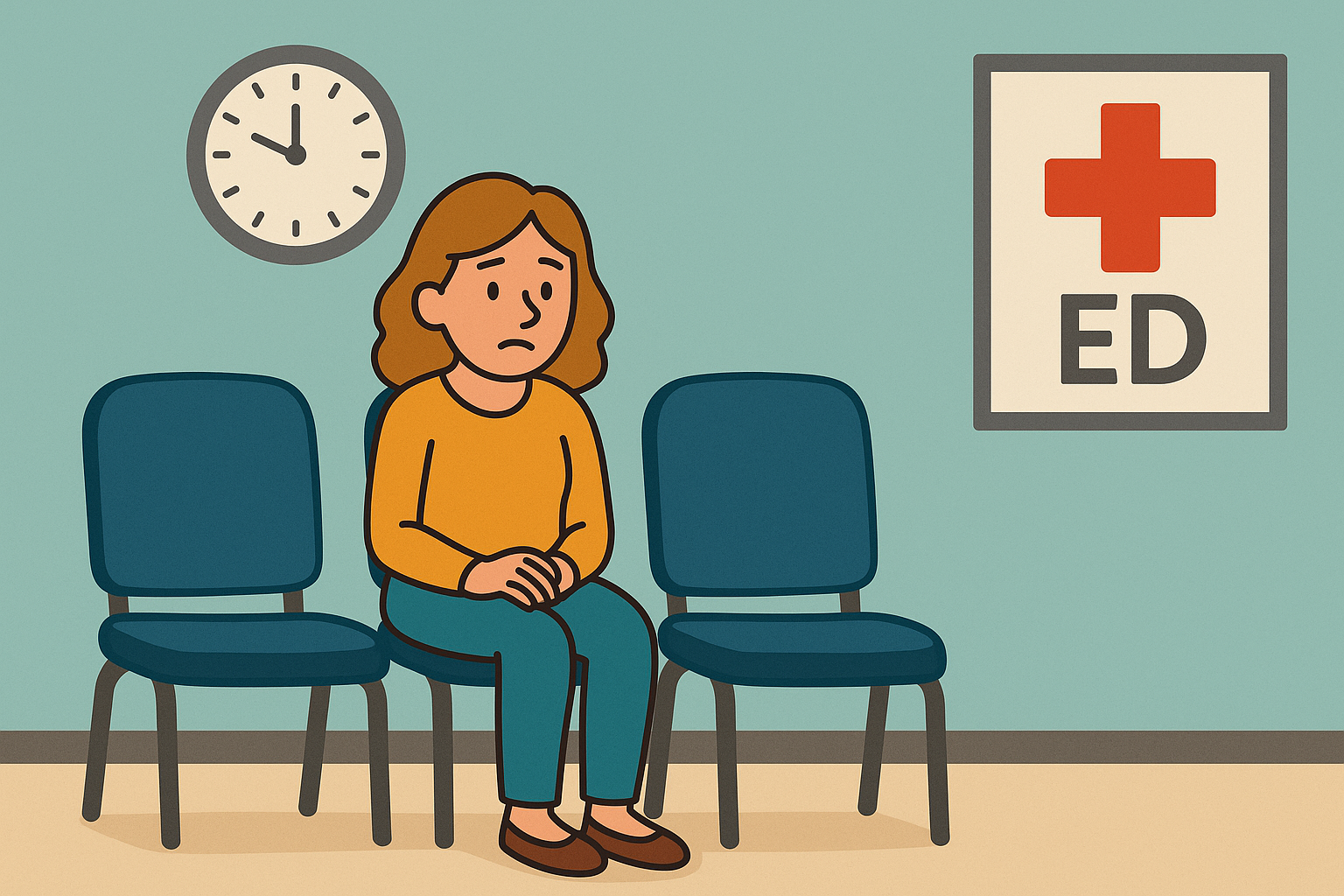
The question I hear most often in the emergency department is: "So, how long is this going to take?"
I completely understand. I am an emergency medicine physician, and we are some of the most impatient people you will ever meet. We like answers. We like movement. We like the next step.
Here is the reality: many patients who go home after an emergency department visit spend several hours with us. That can feel like forever when you are not feeling well, but there is usually a reason for the wait.
What's Actually Happening During Those Hours
Lab work takes timeBlood and urine tests often need 45-90 minutes to process, assuming the samples are good and do not need to be redrawn. The lab is helping us see what is happening inside your body.
Imaging is more than the scanX-rays and CT scans are not just the few minutes you spend in the scanner. They include ordering, transport, the scan itself, image processing, and a radiologist's interpretation.
Consultations add another layerIf we need to call a specialist, hospitalist, surgeon, or primary care clinician, that can add time. They may be seeing other patients, in procedures, in clinic, or covering multiple locations.
Symptoms can changeSometimes pain returns, nausea improves then comes back, a fever appears, or a test result pushes us to repeat something. Those are not pointless delays. They are reassessments.
Why It Feels Like Nothing Is Happening
Some of the most important parts of emergency care are invisible from the room. Your blood may be in the lab. Your images may be waiting for a radiologist. Your clinician may be reviewing results, talking with a consultant, checking prior records, or caring for a patient who just became critically ill.
That does not make the waiting easy. It just means quiet time in the room is not always wasted time.
If you are not sure what is happening next, it is okay to ask: "What are we waiting on right now?" or "What is the next step in my care?" Those are fair questions.
Emergencies Are Not Predictable
The emergency department is one of the few places where the schedule can change completely in seconds. A stroke, heart attack, severe trauma, or critically ill patient may arrive without warning.
When that happens, the team may need to shift quickly. It does not mean you were forgotten. It means someone else suddenly needed immediate life-saving care.
The Bottom Line
We are moving as quickly as we can while being as safe as possible.
Every extra minute usually means we are waiting for important information, double-checking something, treating symptoms, reassessing your response, or building the safest plan for what happens next.
If your visit takes longer than expected, it is not because we forgot about you. It is because we are working to get the right answers, provide the right treatment, and make sure the plan is safe before you leave.
— Dr. Eric Cummins, MD