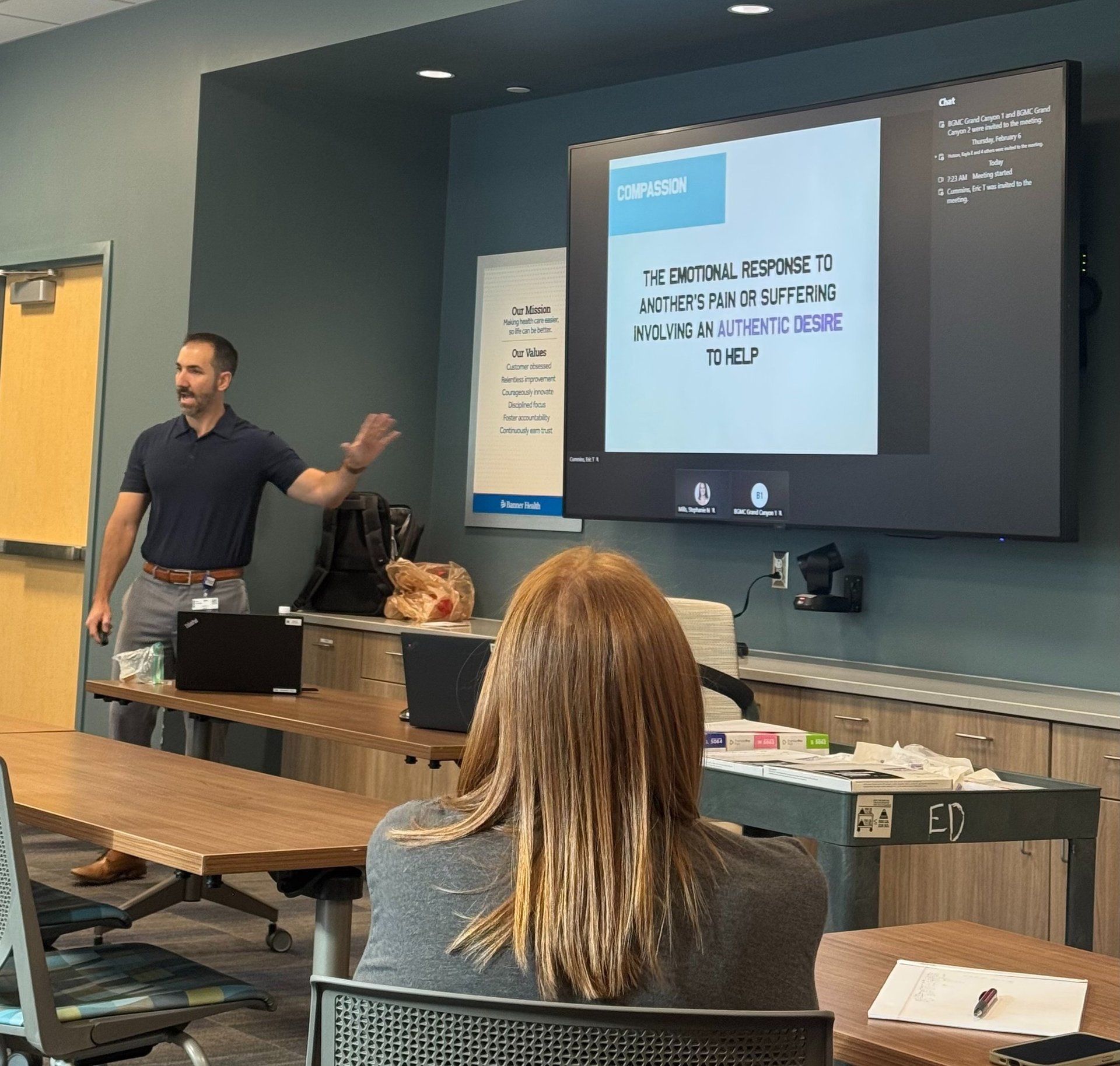
I recently had to do something that felt a little uncomfortable. I gathered our Emergency Department nursing staff for a talk about compassion.
Now, before you roll your eyes and think, "Great, another touchy-feely lecture from the doc," hear me out. Because what I witnessed over the past few months made me realize we are facing a real problem.
The Wake-Up Call I Almost Missed
The moment that really drove this home for me happened about six years ago, and I almost missed its significance entirely.
We had a cardiac arrest come in, a PEA arrest, which unfortunately has a very high mortality rate. Despite our best efforts, we could not save him. After we called the time of death, I was exhausted, a little burned out, and honestly just wanted to move on to the next patient.
But something made me pause and sit with the family instead of rushing off.
"We're actually thankful you were on call tonight."
Through their tears, they told me I had helped their father three years earlier when he came in with chest pain and did not want to stay. I had convinced him to stay for monitoring. So when he returned years later, in the worst moment of their lives, they knew everything that could have been done for their dad was done.
I barely remembered that encounter from three years earlier. To me, it was probably just another busy night where I took a few extra minutes to talk a reluctant patient into staying for observation. But to this family, that moment of care had meant everything. It gave them peace in their worst moment, knowing their father had been in good hands.
The scary part? I almost missed this entire conversation because I was too busy and frankly too burned out to sit with them. I came this close to walking away and never knowing the impact that one compassionate moment had made years earlier.
That conversation forever changed how I view my work and the meaningful impact I can have on a daily basis.
We've Become Medical Robots
Do not get me wrong, I am proud of how skilled we have become. We are like the ultimate pit crew, perfectly tuned to handle any medical emergency. Need an IV in a dehydrated patient? Done. Heart attack? We have protocols designed to open blocked heart vessels and save lives quickly.
But our patients are not cars rolling into the shop for a tune-up. They are someone's mom, dad, kid, or best friend. And they are usually scared out of their minds.
I have watched nurses chart vitals without making eye contact. I have seen doctors interrupt patients and families within seconds. We have become so efficient at the technical aspects that we sometimes forget there is a human being behind those vital signs.
Compassion Is Not Art. It Is Science.
Here is where I really got to blow some minds during my lecture. I do not view compassion as part of the "art of medicine." That phrase makes it sound optional, like bedside manner is just a nice bonus if you have time for it.
No. Compassion is evidence-based medicine. It is a clinical intervention with measurable outcomes.
A Harvard study showed that just 40 seconds of genuine compassion from a doctor during a cancer diagnosis meeting significantly reduced patient anxiety. Forty seconds. That is barely enough time to microwave leftover pizza, but it produces real, measurable results.
The data is powerful. Another Harvard study looked at patients taking HAART medication for HIV. When patients felt their doctor showed genuine interest in them as individuals, they were more likely to take their medication properly and had better clinical outcomes.
Compassionate care improves medication adherence, reduces physical symptoms, and can speed healing. Studies show it can lower blood pressure, reduce inflammation markers, and even support immune function.
This is not just being nice. It is an intervention with real clinical benefits.
The Challenge We Face
Healthcare has become incredibly demanding. We are understaffed, overworked, and dealing with sicker patients than ever. It is easy to become numb to suffering when you see it every single day.
And yes, some patients are difficult. The patient who argues about every single thing you do. The patient who keeps coming back. The patient who is scared but expresses it as anger. It is tempting to put up walls and just get through the shift.
But that is precisely when compassion matters most. Even difficult patients are often scared, in pain, or feeling powerless. Sometimes a little understanding can turn your worst interaction into your most meaningful one.
The 40-Second Rule
I challenged our team to try what I call the 40-Second Rule. In every patient interaction, find 40 seconds to be genuinely present. Make eye contact. Use their name. Validate their pain or concern. Go over the plan in detail.
It can be as simple as saying, "I know this is scary, but we are going to take good care of you," or "I can see you are in pain. Let's work on making you more comfortable."
Why This Matters More Than Ever
We are not just treating medical conditions. We are often the only bright spot in someone's worst day. The emergency department might be routine for us, but for our patients, it is usually crisis mode.
When someone's world is falling apart, we have the power to make them feel seen, heard, and cared for. That is not just good medicine. It is the kind of healing that goes beyond what any medication can do.
Moving Forward
I was incredibly proud to have this conversation with our nursing team, and their response was amazing. We are not trying to slow down our efficiency or spend hours holding hands. We are just remembering that behind every patient number is a person who deserves both excellent medical care and basic human kindness.
At the end of the day, the most potent medicine we can offer is not always found in a syringe or a pill bottle. Sometimes it is simply showing up as one human being caring for another.
If we cannot find 40 seconds to be kind in the ED, where healing is literally our job, where can we?
— Dr. Eric Cummins, MD